
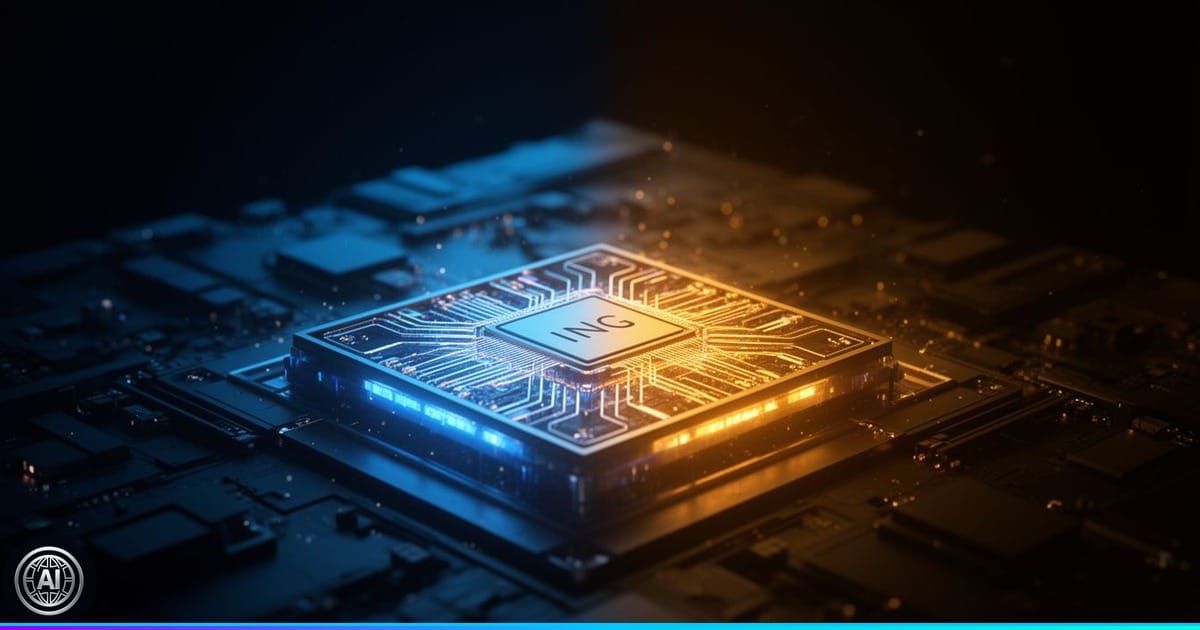
A surprising number of organizations are now engaging with quantum computing, signaling a growing demand for practical applications. In response, NVIDIA has released Ising, the world’s first family of open quantum AI models designed to build and improve quantum processors. This initiative aims to accelerate the development of usable quantum hardware by automating complex tasks traditionally handled by human experts, potentially bridging the gap between theoretical quantum potential and real-world deployment.
Automating Quantum Computing’s Toughest Challenges
NVIDIA’s Ising family tackles two critical bottlenecks in quantum computing: calibration and error correction. According to technical documentation, Ising Calibration utilizes a vision language model to autonomously interpret and react to quantum processor measurements. This automation dramatically reduces calibration time, a process that previously took days, down to mere hours. This speedup is crucial for the iterative development cycles needed to refine quantum hardware.
Furthermore, Ising Decoding is engineered to address quantum errors in real-time. This component employs 3D convolutional neural networks (CNNs) to achieve up to 2.5x faster performance and 3x higher accuracy in error correction compared to existing methods like pyMatching. According to technical reports, this enhanced efficiency is vital for maintaining the delicate quantum states required for computation.
Broad Adoption and a Hybrid Future
The impact of Ising is evident in its broad day-one adoption. Leading organizations such as Atom Computing, Fermi National Accelerator Laboratory, Harvard, IonQ, and IQM Quantum Computers are among the initial users, alongside over a dozen universities and enterprises. This widespread acceptance highlights the perceived value of NVIDIA’s approach to democratizing quantum hardware development.
Ising seamlessly integrates with NVIDIA’s existing CUDA-Q software platform and the NVQLink hardware interconnect, facilitating powerful hybrid quantum-classical computing. NVQLink, described as an open platform architecture, tightly couples conventional supercomputing hosts with quantum system controllers (QSCs). According to technical specifications, NVQLink brings accelerated computing directly into the quantum stack, enabling GPU superchips to manage the online workloads of the quantum processing unit (QPU) itself.
📊 Key Numbers
- Calibration time reduction: days to hours
- Ising Decoding performance improvement: up to 2.5x faster than pyMatching
- Ising Decoding accuracy improvement: 3x higher than pyMatching
🔍 Context
NVIDIA’s Ising release directly addresses the significant gap in efficient and automated quantum processor management, a hurdle that has slowed practical quantum hardware development. This announcement accelerates the trend of integrating AI into complex scientific computing domains, aiming to make quantum systems more accessible and reliable. The direct market rival here is the continued reliance on traditional, purely algorithmic approaches to quantum error correction, such as those implemented by libraries like pyMatching, which, while deterministic, lack the speed and adaptability of AI-driven solutions. The past six months have seen a palpable increase in investment and research focus on quantum error correction and calibration techniques, making NVIDIA’s timing particularly relevant.
💡 AIUniverse Analysis
Our reading: NVIDIA’s Ising represents a significant bet on AI’s capacity to untangle the intricate challenges of quantum computing operations. The promise of drastically reduced calibration times and more accurate, faster error correction through machine learning models like vision language models and CNNs is genuinely compelling. This shift from deterministic algorithms to adaptive AI could unlock unprecedented efficiencies for quantum hardware developers.
The shadow, however, lies in the inherent opacity of deep learning models. While Ising offers speed and accuracy gains, the trade-off is a potential increase in complexity and a reduced level of auditability compared to purely algorithmic methods. Diagnosing specific failure modes in error correction might become more challenging with AI-driven systems, raising questions about long-term maintenance and debugging for critical quantum applications. The widespread adoption now, while positive, hinges on the long-term stability and interpretability of these AI models in a field where precision and predictability are paramount.
For Ising to truly matter in 12 months, we would need to see compelling evidence of its robustness in diverse quantum computing architectures and clear pathways for users to understand and debug its AI-driven decision-making processes.
⚖️ AIUniverse Verdict
Promising. The automation of quantum calibration to hours from days, coupled with AI-driven error correction offering 3x higher accuracy, presents a strong case for accelerating quantum hardware development.
🎯 What This Means For You
Founders & Startups: Founders can leverage Ising to accelerate quantum hardware development and build more robust quantum applications without needing to manually tackle the intricate challenges of quantum calibration and error correction.
Developers: Developers gain access to AI models that automate critical quantum computing engineering problems, enabling them to focus on higher-level quantum algorithm design and hybrid classical-quantum application development.
Enterprise & Mid-Market: Enterprises can explore and adopt practical quantum computing solutions sooner by benefiting from NVIDIA’s efforts to make quantum hardware more stable and efficient through AI-driven automation.
General Users: While indirect, the practical impact for everyday users could eventually manifest as more powerful AI and scientific discovery driven by advancements in quantum computing enabled by tools like Ising.
⚡ TL;DR
- What happened: NVIDIA released Ising, a family of open quantum AI models to automate quantum computer calibration and error correction.
- Why it matters: It dramatically speeds up critical quantum computing operations, making practical quantum hardware development more feasible.
- What to do: Watch for adoption and performance benchmarks in real-world quantum systems to gauge the AI-driven approach’s long-term impact.
📖 Key Terms
- Ising Calibration
- An AI-driven process within NVIDIA’s Ising family that uses a vision language model to interpret quantum processor measurements, significantly reducing the time needed for calibration.
- Ising Decoding
- A component of NVIDIA’s Ising family that employs 3D convolutional neural networks (CNNs) for real-time quantum error correction, aiming for faster and more accurate error management than traditional methods.
- vision language model
- An artificial intelligence model capable of understanding and interpreting both visual information and textual data, used here to analyze quantum processor measurements.
- qubit
- The fundamental unit of quantum information, analogous to a bit in classical computing, but capable of representing superposition and entanglement.
- NVQLink
- An open platform architecture from NVIDIA that tightly couples supercomputing hosts with quantum system controllers, integrating accelerated computing into the quantum stack to support QPU workloads.
Analysis based on reporting by MarkTechPost. Original article here. Additional sources consulted: Official Blog — developer.nvidia.com; Official Blog — developer.nvidia.com.