

Anthropic’s Claude Opus 4.8 Unleashes Agent Swarms for Complex Tasks, With Speed Mode Now Cheaper
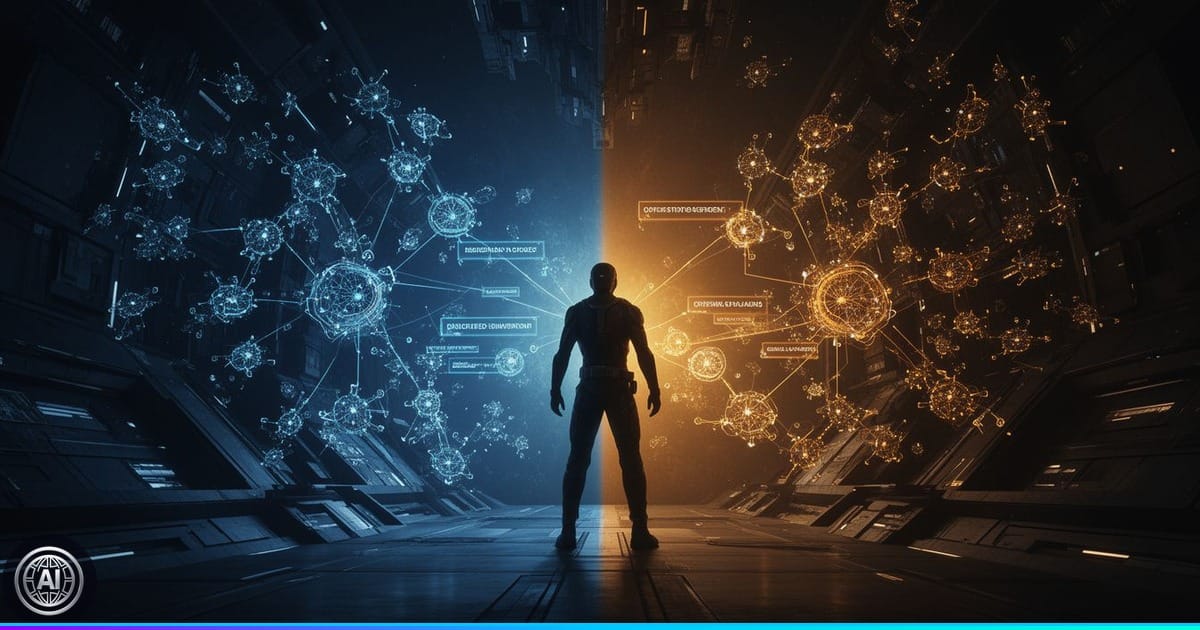
Complex projects can now be tackled by AI agents coordinating in swarms, as Anthropic rolls out Claude Opus 4.8 with a new Dynamic Workflows feature. This capability allows for the orchestration of up to 1,000 subagents, capable of executing intricate tasks at scale. The introduction of these agentic coordination tools marks a significant shift beyond simple conversational AI towards automated, multi-agent problem-solving.
Orchestrating AI Agents at Scale
Anthropic’s Dynamic Workflows enable a new paradigm where JavaScript scripts generated by Claude itself direct teams of subagents. These agents can execute tasks in parallel, preventing the main AI session from becoming bogged down and keeping it responsive. This intricate coordination extends to managing intermediate results, which are stored in script variables rather than taxing Claude’s main context window.
The complexity of these orchestrated efforts is managed through a cap of 1,000 total subagents and 16 concurrent agents per run. This structured approach allows for interruptible workflows, where progress can be saved and resumed later within the same session, providing a more robust experience for long-running projects.
Faster, Cheaper AI with Enhanced Speed Mode
Alongside Dynamic Workflows, Anthropic has introduced a significantly more affordable Fast Mode for Claude Opus 4.8. This mode offers 2.5x faster output token speeds, making it ideal for rapid iteration and live debugging. The pricing for this enhanced speed is now three times cheaper than for previous Opus versions, presenting a trade-off of cost for accelerated performance.
Both Dynamic Workflows and the new Fast Mode are currently offered as research previews. Anthropic indicates that pricing and availability are subject to change, underscoring the experimental nature of these advanced capabilities as they are tested with users.
📊 Key Numbers
- Maximum subagents per workflow run: 1,000
- Maximum concurrent agents: 16
- Bun Rust port test suite pass rate: 99.8%
- Bun Rust port code lines generated: Approximately 750,000
- Bun rewrite duration: 11 days from commit to merge
- Fast Mode output token speed increase: 2.5x
- Fast Mode price reduction compared to previous Opus: Three times cheaper
🔍 Context
The release of Claude Opus 4.8 with Dynamic Workflows addresses the growing need for AI systems that can manage complex, multi-step tasks autonomously. This capability moves beyond single-turn interactions to enable agents to collaborate and execute intricate problem-solving at scale. The introduction of Dynamic Workflows fits into a broader trend of developing more agentic AI systems capable of self-coordination. While Anthropic’s approach focuses on orchestration via generated scripts, competitors are exploring various methods for agent communication and task delegation. The pricing strategy for Fast Mode, making it significantly cheaper for Opus 4.8, suggests a push to increase adoption and gather user data on high-throughput use cases. This announcement comes on May 28, 2026, as the AI landscape continues its rapid evolution toward more sophisticated automation.
💡 AIUniverse Analysis
LIGHT: The genuine advance here lies in Anthropic’s sophisticated approach to agent coordination, enabling a single AI to manage a swarm of up to 1,000 subagents. The successful 750,000-line Rust port of Bun in just eleven days serves as a powerful, if preliminary, demonstration of this parallel processing power. This move signals a move towards AI that can autonomously break down and execute highly complex, multi-stage projects, akin to a distributed software development team managed by a single AI architect.
SHADOW: The significant risk with Dynamic Workflows is the potential for uncontrolled token consumption and escalating costs. Orchestrating 1,000 agents, even with intermediate results stored externally, could lead to substantial bills if not carefully managed. The fact that the Bun port is not yet in production also tempers enthusiasm; the real-world viability and efficiency of such large-scale agent coordination remain to be proven under diverse, unpredictable conditions. Users must be vigilant about monitoring usage credits and potential runaway processes.
For this development to truly matter in 12 months, Anthropic must demonstrate robust cost controls and transparent usage metrics for its Dynamic Workflows, alongside evidence of successful, production-ready deployments beyond the initial showcase project.
⚖️ AIUniverse Verdict
✅ Promising. The ability to orchestrate 1,000 subagents, as demonstrated by the rapid Bun port, represents a significant leap in AI task management, but its real-world cost-effectiveness and reliability as a research preview need further validation.
🎯 What This Means For You
Founders & Startups: Founders can leverage these tools to rapidly prototype and test complex software engineering tasks or research projects, potentially accelerating development cycles by orders of magnitude.
Developers: Developers can offload the complexity of managing parallel subagent execution and intermediate state management to Claude’s orchestrated workflows, simplifying large-scale coding and refactoring projects.
Enterprise & Mid-Market: Enterprises can explore automating intricate, multi-step business processes that require convergent and adversarial analysis, potentially achieving higher accuracy and efficiency in complex problem-solving.
General Users: Users may experience faster and more comprehensive AI-driven solutions for complex queries, though the underlying costs and complexities are hidden from view.
⚡ TL;DR
- What happened: Anthropic released Claude Opus 4.8, featuring Dynamic Workflows that orchestrate up to 1,000 AI agents for complex tasks, and a cheaper, faster AI mode.
- Why it matters: This enables AI to tackle previously intractable, large-scale projects through coordinated agent swarms, while also making high-speed AI more accessible.
- What to do: Monitor usage closely if experimenting with Dynamic Workflows due to potential cost escalation, and evaluate the new Fast Mode for speed-critical tasks.
📖 Key Terms
- subagents
- Individual AI components that work together as part of a larger, coordinated task managed by a main AI model.
- dynamic workflows
- A system where an AI dynamically generates scripts to orchestrate multiple AI agents in parallel to complete complex tasks.
- ultracode
- A specialized mode within Claude designed for high-effort, automated code generation and orchestration.
- context window
- The amount of text or data that an AI model can consider at any one time to generate a response.
- usage credits
- A system for purchasing and managing access to AI model services, often priced based on token usage.
Analysis based on reporting by MarkTechPost. Original article here. Additional sources consulted: Official Blog — anthropic.com/news/claude-opus-4-6.
Analysis based on reporting by MarkTechPost. Original article here.