
Shell Puts AI Agents in Charge of Industrial Maintenance, Automating Repairs
Most industrial AI deployments can predict a pump failure days in advance. What they can’t do is file the work order, check spare parts inventory, and trigger procurement — until now. This shift signifies a departure from mere alert systems, pushing towards AI that can not only detect potential failures but also autonomously initiate and manage repairs with minimal human intervention. The energy sector, in particular, is embracing this “agentic AI” to bridge the gap between predictive insights and actual, automated fixes.
Bridging the Last Mile in Industrial Operations
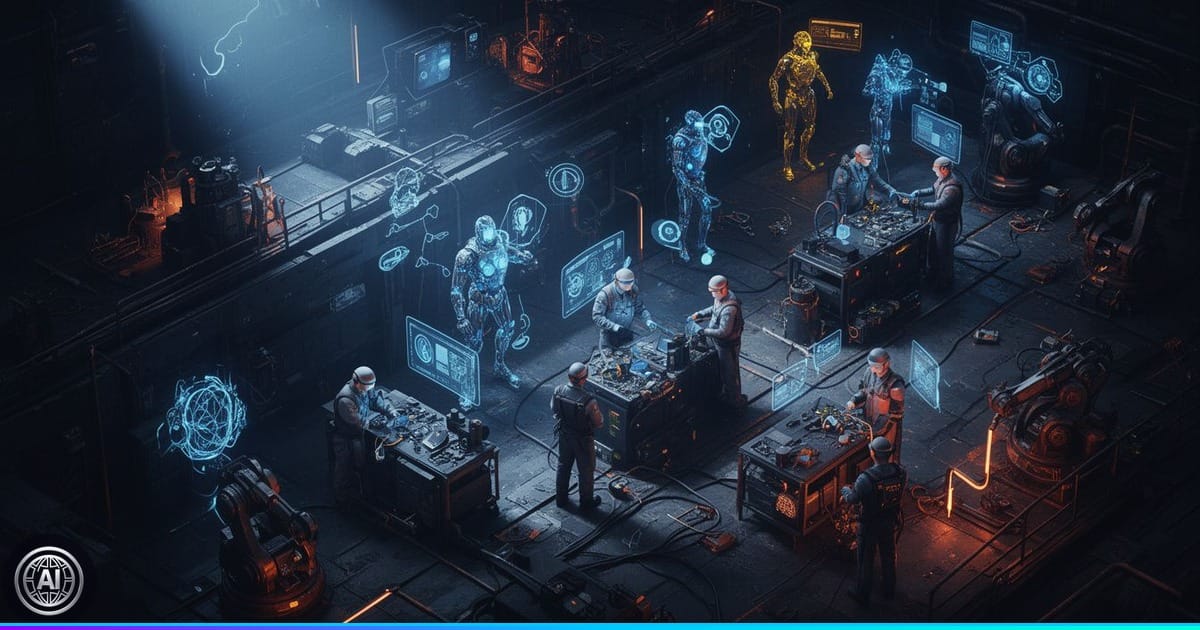
Shell is set to leverage C3 AI agents to advance beyond basic anomaly detection, aiming for a fully automated predictive maintenance process. Currently, the company utilizes the C3 AI Reliability Suite to monitor an extensive fleet of over 30,000 pieces of equipment. This new initiative will see C3 AI agents take ownership of the entire maintenance lifecycle, from the initial warning sign to the final completed repair, fundamentally altering operational efficiency.
From Data to Automated Action: The Agentic Workflow
The core of this advancement lies in the integration of operational technology (OT) data with critical business context drawn from enterprise resource planning (ERP) platforms like SAP. AI agents will now independently investigate the root causes of alerts, draft necessary work orders, check available inventory, and even generate procurement requests when parts are needed. While human operators retain the ability to approve or override suggested fixes, the system is designed for eventual full automation of certain alerts over time, promising substantial economic value and reduced unplanned downtime.
📊 Key Numbers
- Equipment Monitored: Over 30,000 pieces of equipment
- Maintenance Lifecycle Automation: From initial warning to completed repair
- Data Integration: Operational technology (OT) and ERP platforms like SAP
- Agentic Tasks: Investigate alerts, draft work orders, check inventory, generate procurement requests
- Economic Value Potential: Hundreds of millions of dollars
🔍 Context
This development addresses the critical challenge within the energy sector of converting predictive maintenance insights into actionable, timely repairs. The trend towards agentic AI, which can autonomously execute tasks, is accelerating as companies like Shell seek to enhance operational efficiency and safety. While C3 AI is a key player, similar advancements are emerging across industrial automation platforms that aim to streamline complex workflows. The integration of OT data with ERP systems, such as SAP, is crucial for creating a holistic view of operational needs, moving beyond siloed data. The timeliness of this announcement is tied directly to the maturation of agentic AI capabilities enabling end-to-end automation in demanding industrial environments.
💡 AIUniverse Analysis
Shell’s adoption of C3 AI agents for fully automated predictive maintenance represents a significant stride in industrial operations, moving beyond simple anomaly detection to encompass the entire repair lifecycle. The ability of these agents to independently investigate issues, draft work orders, and manage procurement, directly integrates operational technology with business context, promising substantial reductions in downtime and considerable economic benefits. This initiative underscores the growing enterprise appetite for AI that can deliver tangible, automated outcomes rather than just insights.
However, the inherent complexity of integrating such deeply interconnected systems, managing sensitive operational data, and the potential for vendor lock-in with platforms like C3 AI and SAP warrants careful consideration. The reliance on proprietary agent reasoning raises questions about transparency and adaptability compared to more open-source, modular approaches. Furthermore, the system’s ultimate success in reducing downtime and realizing economic value is contingent on the accuracy of the AI agents and the quality of the data feeding them. The continued need for human oversight in approvals also introduces variability, and the path to full automation for complex tasks remains a considerable challenge.
For this initiative to truly matter in twelve months, Shell and C3 AI must demonstrate measurable reductions in unplanned downtime beyond pilot stages, alongside clear economic returns that justify the integration investment. The robustness and adaptability of the agentic system under diverse operational stresses will also be key indicators of its long-term viability.
⚖️ AIUniverse Verdict
✅ Promising. The automation of the entire maintenance lifecycle, from issue detection to repair initiation, promises substantial operational efficiency gains for Shell, as highlighted by the potential for hundreds of millions of dollars in economic value.
🎯 What This Means For You
Founders & Startups: Founders can leverage the demonstrated enterprise demand for autonomous industrial AI solutions by focusing on niche equipment or specific failure prediction challenges with highly integrated, actionable outputs.
Developers: Developers will need to master complex system integrations between OT, ERP, and AI agent platforms, focusing on secure data pipelines and robust workflow automation capabilities.
Enterprise & Mid-Market: Enterprises can unlock substantial cost savings and operational improvements by automating the reactive and administrative aspects of maintenance, freeing up human capital for more strategic tasks.
General Users: End-users in industrial settings will experience increased equipment reliability and safety, with fewer unexpected outages impacting their work.
⚡ TL;DR
- What happened: Shell is deploying C3 AI agents to automate predictive maintenance from detection to repair.
- Why it matters: This aims to significantly reduce industrial downtime and unlock substantial economic value through autonomous operations.
- What to do: Monitor the integration complexity and demonstrated reliability of these agentic systems in large-scale industrial deployments.
📖 Key Terms
- operational technology (OT)
- Systems that monitor and control physical processes and devices in industrial environments.
- agentic AI
- Artificial intelligence systems capable of independently performing complex tasks and making decisions to achieve goals.
- ERP platforms
- Enterprise Resource Planning software that integrates various business functions like finance, HR, and operations.
- anomaly detection
- The identification of rare items, events, or observations which raise suspicions by differing significantly from the majority of the data.
Analysis based on reporting by AI News. Original article here.