

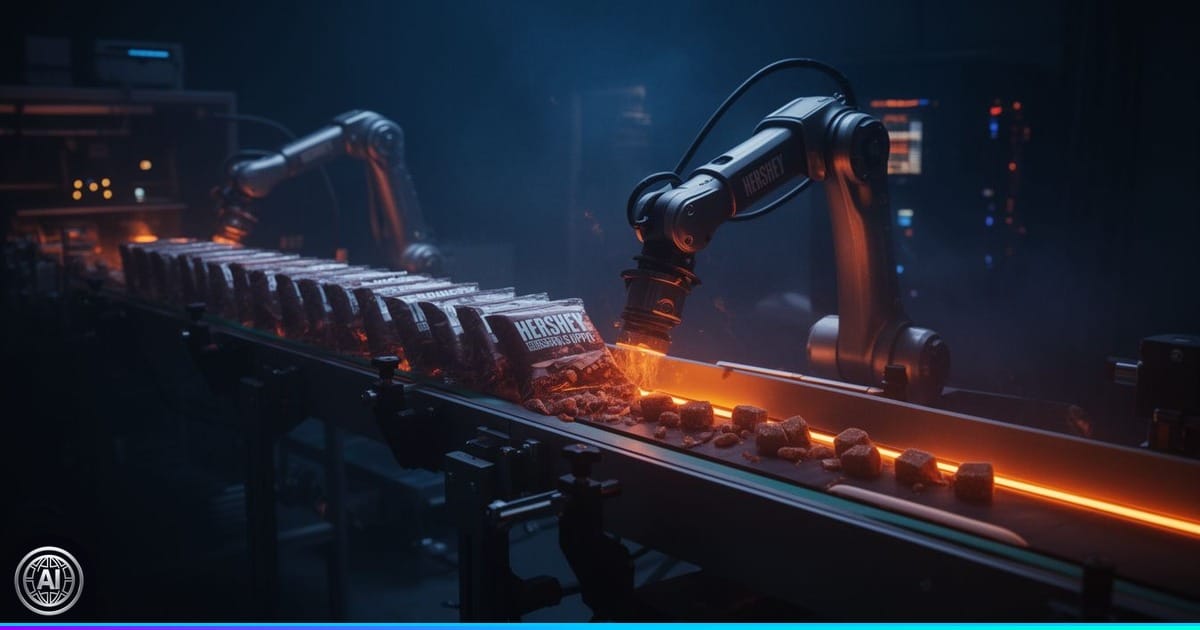
Confectionery giant Hershey is embarking on a significant digital transformation, aiming to weave artificial intelligence (AI) throughout its entire supply chain. This move signals a broader industry trend where AI is no longer confined to digital realms but is actively reshaping physical operations. The company’s ambitious plan underscores the growing recognition that intelligent systems are key to navigating the complexities of modern manufacturing and logistics.
By integrating AI, Hershey seeks to create what it describes as “a faster, smarter and more resilient supply chain powered by automation and AI-enabled decision making.” This strategic shift suggests a future where operational choices are guided by sophisticated data analysis, leading to more agile responses to market demands and potential disruptions. It’s a move that could set a new benchmark for efficiency and robustness in the consumer goods sector.
Boosting Operational Agility with Intelligent Automation
Hershey’s strategy involves applying AI across a wide spectrum of its operations, from the initial sourcing of raw materials to the final delivery of products. The company plans to “incorporate AI in every stage of its operations,” a holistic approach that covers sourcing analytics, enhanced worker connectivity, automated fulfillment processes, and advanced plant automation. This comprehensive integration aims to streamline every touchpoint within the supply chain.
The integration will see AI embedded into manufacturing for improved efficiency, acting as a core component of the operating model to guide planning and support execution. Digital planning tools are specifically designed to tackle issues like waste reduction and inventory optimization. Furthermore, automated fulfillment systems are slated to handle custom assortments and accelerate speed to market, ensuring products reach consumers quicker.
Unpacking the “AI-Enabled Decision Making” Promise
While Hershey highlights the benefits of AI-enabled decision-making, the specifics of how this translates into tangible operational improvements remain largely conceptual in the announcement. The core promise hinges on AI’s ability to analyze supplier data and market trends for better raw material purchasing and risk management. However, the practical challenges of integrating diverse AI systems into complex, real-world manufacturing environments are not deeply explored.
The emphasis on “worker connectivity” also points to a human-AI collaboration strategy, a critical but often intricate aspect of AI adoption. The success of such initiatives often depends on seamless communication and intuitive interfaces, elements that are not detailed. The article, therefore, presents a strategic vision rather than a deep dive into the technological underpinnings or measurable outcomes of Hershey’s AI deployment.
🔍 Context
Supply chain management is the backbone of global commerce, involving the intricate flow of goods and services. Artificial Intelligence (AI) refers to the simulation of human intelligence processes by machines, especially computer systems. AI adoption in supply chains is accelerating as companies seek to optimize processes, reduce costs, and enhance resilience against disruptions like those seen in recent years.
💡 AIUniverse Analysis
Hershey’s announcement is a clear signal that AI is moving beyond theoretical applications to become a foundational element of operational strategy in the physical world. The company’s commitment to integrating AI across its entire supply chain, from sourcing to fulfillment, is ambitious and points towards a future where data-driven insights are paramount. This broad application suggests a belief in AI’s ability to deliver systemic improvements rather than just isolated gains.
However, the current framing, while positive, leans heavily on strategic intent. The true measure of success will lie in the concrete implementation and quantifiable results of this AI integration. How effectively AI-enabled decision-making translates into fewer errors, faster throughput, and reduced waste in complex physical operations is the critical question. The success of “worker connectivity” will also be a key indicator of how well Hershey manages the human element in this technological evolution.
🎯 What This Means For You
Founders & Startups: Founders can leverage this case study to highlight how AI can move beyond software to optimize physical supply chain operations, creating new niches for AI solutions in manufacturing and logistics.
Developers: Developers will need to focus on integrating AI decision-making engines with existing plant automation systems and supply chain data platforms for seamless operational execution.
Enterprise & Mid-Market: Enterprise companies can see a model for broader AI adoption beyond narrow pilots, integrating AI directly into core business functions for tangible operational improvements.
General Users: Everyday users may experience faster delivery times and potentially more consistent product availability due to improved inventory management and supply chain efficiency.
⚡ TL;DR
- What happened: Hershey is implementing AI across its entire supply chain, from sourcing to delivery.
- Why it matters: This aims to create a more efficient, responsive, and resilient supply chain through intelligent automation and decision-making.
- What to do: Watch for quantifiable results and the integration of human-AI collaboration as Hershey rolls out its AI strategy.
📖 Key Terms
- sourcing analytics
- The analysis of data related to acquiring raw materials and components.
- plant automation
- The use of technology to control and operate manufacturing facilities with minimal human intervention.
- fulfillment
- The process of receiving, processing, and delivering customer orders.
- AI-enabled decision making
- The use of artificial intelligence to assist or automate the process of making choices in operations.
- supply chain
- The entire network of organizations, people, activities, information, and resources involved in moving a product or service from supplier to customer.
Analysis based on reporting by AI News. Original article here.