

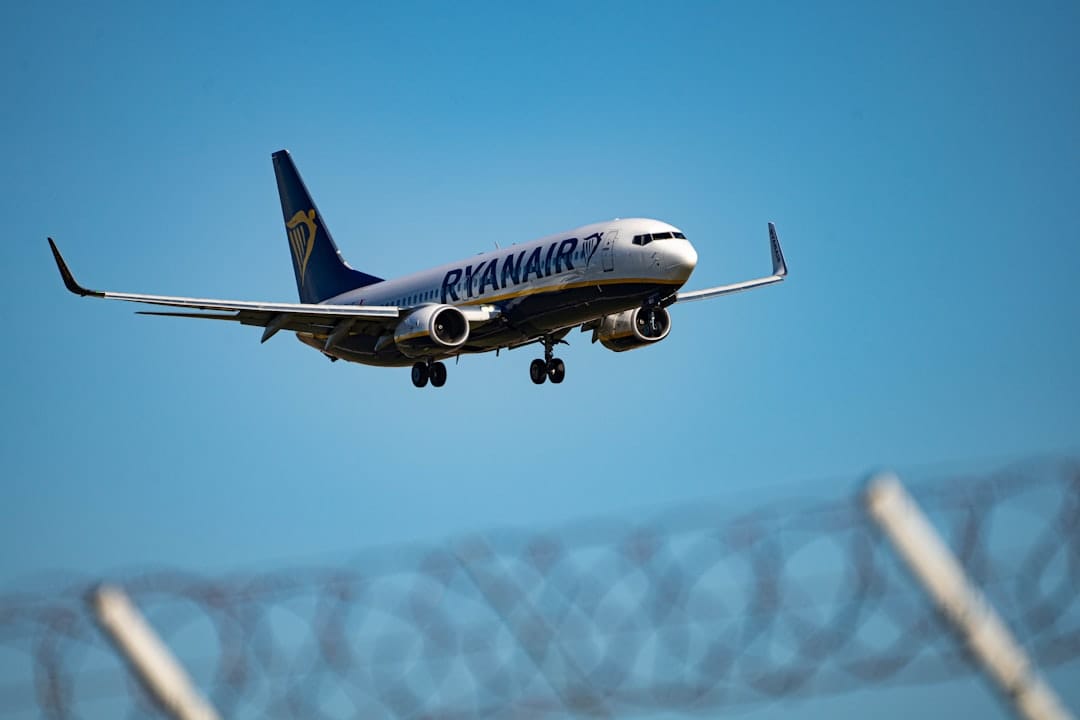
Artificial Intelligence Meets Air Travel: Ryanair’s Summer 2026 Schedule Boost
As the world inches closer to a more AI-driven travel experience, a significant development in the aviation industry has garnered attention in 2026. Ryanair, a prominent European budget airline, has announced a full summer schedule for 2026, following the decision by Wallonia, a region in Belgium, to abolish a passenger tax. This move is expected to ignite a tourism boom in the region and has far-reaching implications for the airline industry, artificial intelligence (AI) in travel, and the global economy.
What Is Happening
In a significant boost to the travel industry, Ryanair has confirmed its full summer 2026 schedule, with a total of 7.5 million seats available for booking. This decision comes after Wallonia, a region in Belgium, scrapped a passenger tax aimed at discouraging tourists. The airline has pledged to capitalize on the tax exemption, offering customers more affordable flights to and from Charleroi Airport, a key hub for Ryanair in Belgium. The airline’s decision is expected to have a positive impact on the local economy, with an estimated increase in tourism revenue.
Key Technical or Market Details
According to industry analysts, the abolition of the passenger tax will not only benefit Ryanair but also other airlines operating in the region. The tax exemption is expected to lead to an increase in demand for flights, resulting in higher revenue for the airline. Additionally, the move will also have a positive impact on the region’s economy, with an estimated increase in tourism revenue. Ryanair’s decision to unveil its full summer schedule is a testament to the airline’s confidence in the region’s ability to attract tourists.
Industry and Business Implications
The implications of Ryanair’s decision are far-reaching, with potential consequences for the airline industry, investors, and the global economy. The move is expected to boost the airline’s revenue, with an estimated increase in demand for flights. Additionally, the decision will also have a positive impact on the local economy, with an estimated increase in tourism revenue. The development is a significant win for the travel industry, which has been impacted by the COVID-19 pandemic and ongoing economic uncertainty.
What Comes Next for Artificial Intelligence in Travel
The decision by Ryanair to unveil its full summer schedule is a testament to the airline’s confidence in the region’s ability to attract tourists. As the world inches closer to a more AI-driven travel experience, the move is expected to have a positive impact on the development of AI in travel. With AI-powered travel assistants and chatbots becoming increasingly popular, the decision by Ryanair is expected to boost the adoption of AI in the travel industry. As the industry continues to evolve, it will be interesting to see how AI-powered travel solutions will shape the future of air travel. Will the rise of AI-powered travel assistants lead to a more seamless and personalized travel experience, or will it create new challenges for airlines and travel operators? Only time will tell.
Tools We Use for Working with AI in 2026
We are participants in the Amazon Associates program. These are genuine recommendations we use or experts recommend.
We earn a small commission on qualifying purchases at no extra cost to you. Thank you for supporting aiuniverse.news!
Hands-On Machine Learning 3rd Ed.
Essential book for practical AI development
MSI Raider 18 HX AI Gaming Laptop (RTX 5080)
High mobile performance for AI inference
ASUS ROG Strix G18 AI Gaming Laptop (RTX 5080)
Powerful for local training of large models
NVIDIA GeForce RTX 4070 Ti
Tarjeta gráfica de alta gama para gaming y aplicaciones de AI.
What’s your favorite AI hardware setup in 2026? Let us know in the comments!